“Moving Shorewood in a better direction isn't about talking louder. It's about listening carefully, asking better questions, and making room for Shorewood voices to be heard. I’d be honored to be your partner in that effort.”
-Eric Magistad
A Simple Observation - When Costs Keep Climbing
People can tell when something is off, even before they sit down to look at the numbers.
Taxes go up. Utility bills go up. Fees increase quietly in the background. Each decision may be discussed separately at city hall, but residents experience them as a stack of bills and a growing sense nobody is asking where the line should be drawn.
Fiscal Responsibility - Government Should Be Careful With Your Money
Government should exercise caution and data-driven accuracy when they ask the public to foot the bills.
Budgets and expenses should be reviewed with an eye toward clear benchmarks and objectives instead of operating from an assumption that every department deserves more every year.
Protecting What Makes Shorewood Special - Listening to Residents
Natural resources matter to people here in a way that isn’t abstract or optional—water, land management, tree canopy.
I intend to listen to residents who have done the homework, because they’re often the first to see what’s changing before it becomes obvious to everyone else.
I will always prioritize residents over bureaucracy and transparency over convenience. I will listen seriously to people who bring thoughtful disagreements or better ideas.
A Background in Public Service - Learning the Importance of Accountability
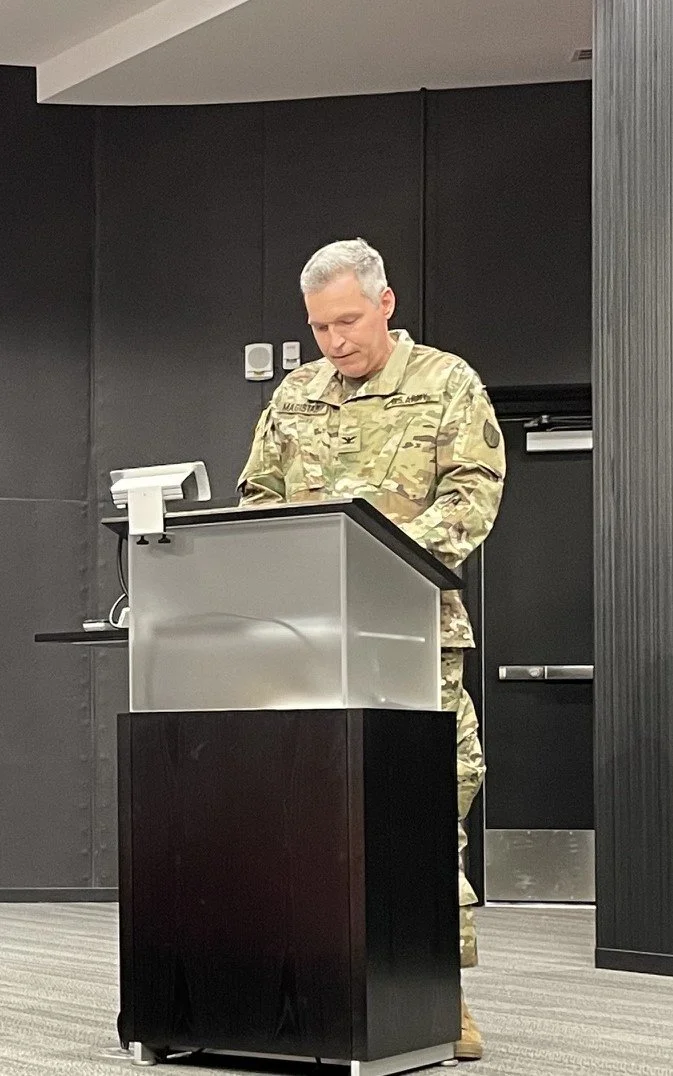
A long-term inclination toward public service has been part of my working life for years, including 22 years in the Army National Guard.
Overseas, I saw up close how local governments can drift from the people when they unilaterally decide it is no longer important to listen.
Asking the Right Questions - Skeptical of Easy Answers
I’ll bring a fresh set of eyes—ask questions, test assumptions, and exercise caution over “silver bullet” solutions.
In my 14 years in banking, including work detecting financial fraud using advanced algorithms, I’ve seen how important it is to look twice at anything presented as cutting edge or game changing.
My Commitment - Thinking and Engaging Beyond the Meeting Agenda
There’s a way of doing city government that doesn’t assume people aren’t paying attention when the microphones turn off. Let’s try that version for a while.
Thank you for your consideration, and in the meantime, don’t take any wooden nickels.
Your neighbor,
Eric Magistad